Concrete and brick disposal isn't like clearing out garden waste or a garage full of boxes — the material is dense, heavy, and hits a skip bin's weight limit long before the bin looks anywhere near full. This guide covers which skip bin size and type actually works for concrete and brick removal around Canberra and Queanbeyan in 2026, and where a bin from CRG Bins fits each type of job.
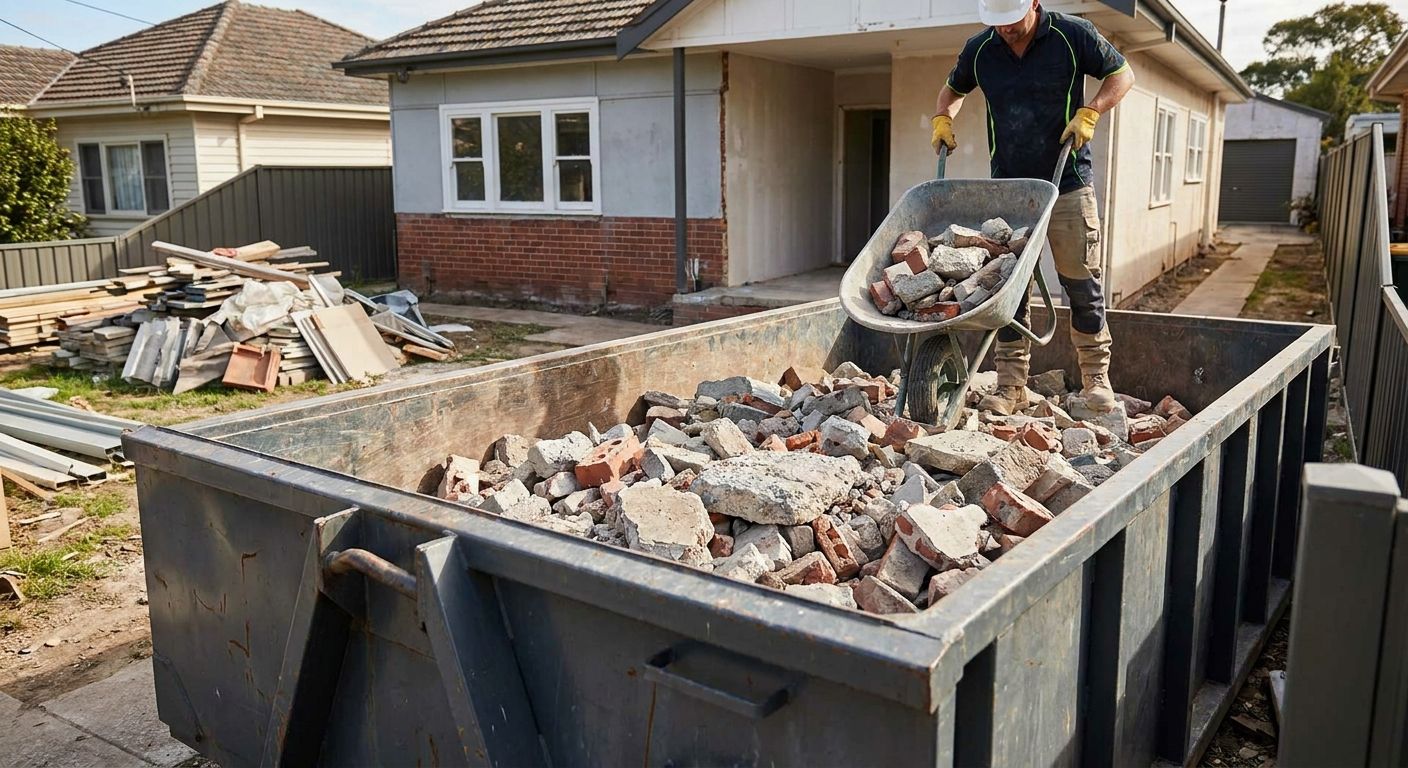
- A 2m³ heavy waste skip suits small concrete and brick jobs like path removal or besser block walls.
- 4m³ heavy waste bins handle bathroom or kitchen demolition rubble without hitting the weight ceiling.
- General waste skips over 6m³ are the wrong call for pure concrete and brick — weight stops you before volume does.
- Skip bin hire for concrete disposal needs a heavy waste rating, not just a bigger skip.
Why this matters
Concrete, brick, tile, and besser block sit in a different weight class to household junk. A cubic metre of broken concrete can weigh close to two tonnes, while the same volume of general household waste might weigh 200-300kg. That's why skip bin operators separate "heavy waste" from "general waste" pricing and sizing — the truck lifting a loaded bin has its own weight rating, and going over it isn't negotiable.
Get this wrong and you'll either pay overweight fees on tip day or find out the 6m³ bin you booked can only legally take a fraction of what it looks like it can hold. Matching the bin to the material saves money and saves a second booking.
Who this is for
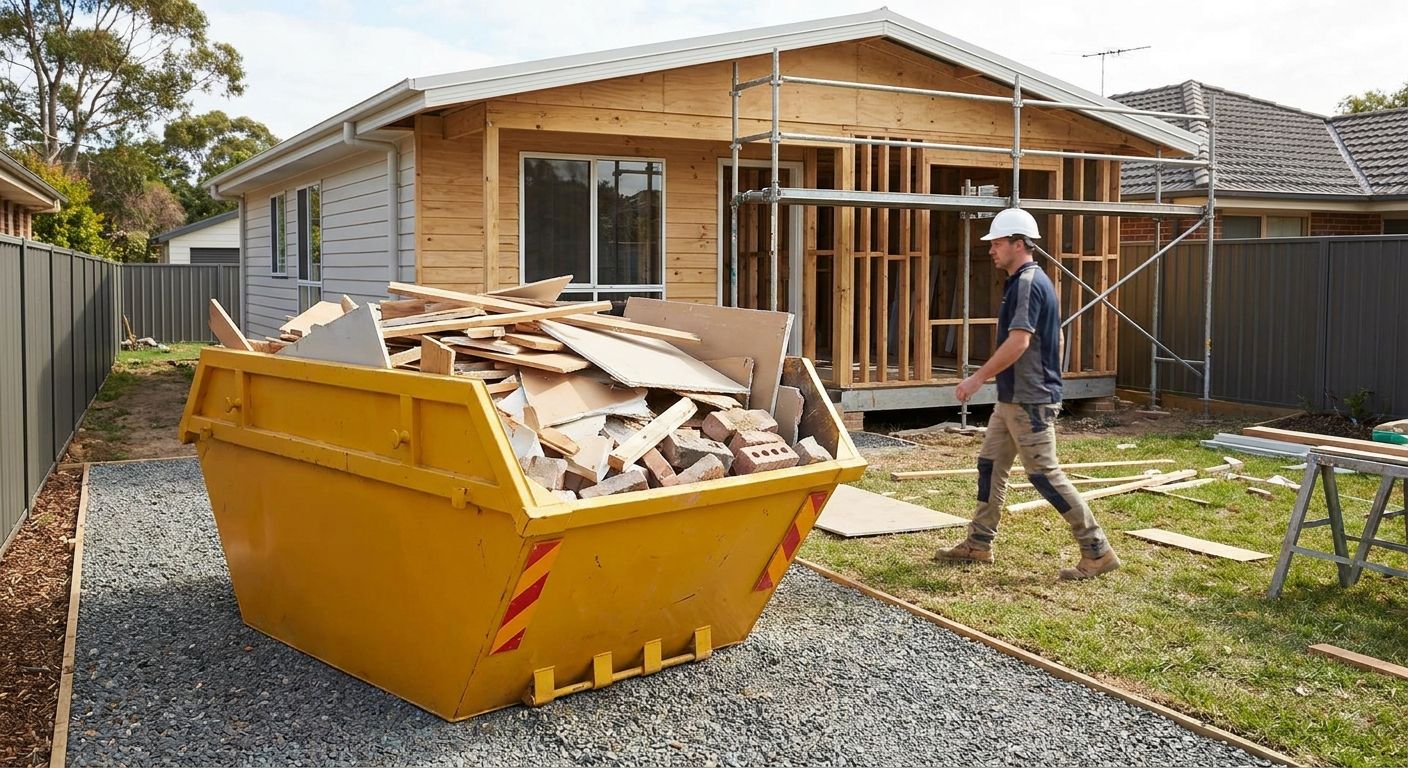
This guide is for homeowners tearing out a cracked driveway or old paving, DIYers pulling down a besser block retaining wall, and tradies running demolition on a bathroom or kitchen job where tile, render, and concrete offcuts make up most of the load. If you're mid-renovation and need bin sizing that matches the actual weight of what's coming out of the house, the construction and renovation skip bin hire options cover exactly this scenario.
Landscapers clearing old brick edging or a paved courtyard fall into the same bracket. If more than half your load is concrete, brick, or tile, treat it as a heavy waste job from the first phone call, not an afterthought once the bin's already on site.
What to look for in skip bin hire for concrete disposal
Weight limit, not bin size
A 4m³ skip advertised for garden waste and a 4m³ heavy waste skip are not interchangeable — the second is built and priced for material that weighs several times more per cubic metre. Ask specifically about the weight allowance before you book, because the cubic metre figure alone tells you nothing about what concrete and brick will do to that limit.
Heavy waste vs general waste classification
Most skip bin providers, CRG Bins included, split heavy waste (concrete, brick, tile, soil, rubble) from general waste (timber, furniture, household rubbish) because tip fees and truck weight ratings differ between the two. Booking under the wrong classification is the single most common reason a concrete job goes over budget.
Fill line restrictions
Heavy waste bins are almost always rated to a lower fill line than general waste bins of the same size, because a truck can only lift so much regardless of how much room is left inside the skip. Overfilling a heavy waste bin isn't just against the rules — it's a genuine safety issue when the truck tries to lift it.
Site access for a loaded bin
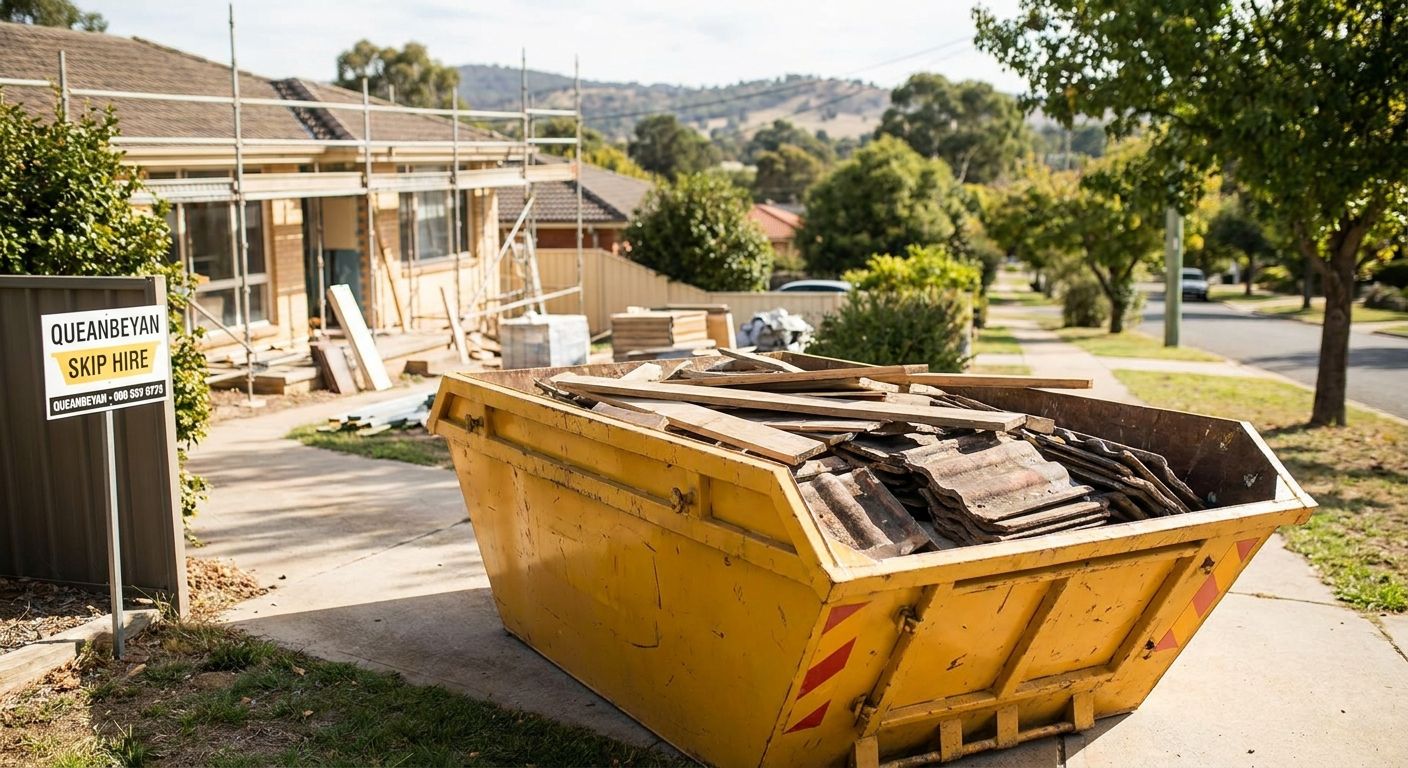
A skip full of concrete is dramatically heavier than the same skip full of green waste, and the ground it sits on and the truck path to collect it both need to handle that weight. Soft lawns, steep driveways, and narrow laneways all become bigger problems once the load is dense rubble rather than light debris.
Mixed-load rules
Concrete mixed with timber, plasterboard, or tiles is common on a real demolition site, but not every provider allows mixed heavy and general waste in one bin. Confirm this before the job starts, because sorting rubble on site after the fact costs more time than booking the right bin upfront.
“If concrete makes up more than half the load, book a heavy waste bin from the start — not a general skip you hope will cope.”
Top picks for concrete and brick jobs
The small-job safe pick — 2m³ mini skip. Suits a single broken path, a small besser block wall, or a stack of old pavers. Weight allowances on this size are generally built for loads under roughly 1.5 tonnes, which covers most single-day concrete removal jobs around the house. Verdict: Buy for anything under one trailer-load of pure concrete or brick.
The bathroom rip-out — 4m³ heavy waste bin. Tile, render, old shower base, and cement sheet from a full bathroom demolition adds up fast in weight even when the room itself is small. This size matches the skip bins for bathroom renovations scope and handles the mix of tile plus concrete backing board without pushing past a sensible weight ceiling. Verdict: Buy for a standard bathroom teardown.
The kitchen demo — 4m³ to 6m³ depending on scope. Benchtop offcuts, tile, and old concrete slab under cabinetry can be heavier than the kitchen looks once it's on the ground. Check the skip bins for kitchen renovations sizing before booking rather than guessing off room size alone, since a stone benchtop alone can eat a large chunk of a heavy waste allowance. Verdict: Consider, confirm weight allowance against your specific benchtop and tile volume first.
The full slab or driveway replacement — dedicated heavy waste bin, sized to the job. Full driveway or slab tear-outs generate more concrete than any single mini skip will hold, and tradies running these jobs regularly need a bin rated for continuous heavy loads rather than a one-off booking. Verdict: Buy, but talk through total tonnage before the truck turns up, not after.
The mixed brick-and-timber demolition — the wildcard. A shed knockdown or old fence removal often mixes brick footings with timber framing, and this is the load type most likely to get knocked back if you don't flag it upfront. Verdict: Consider, and confirm mixed-load acceptance on the phone before the bin arrives.
Verdict comparison
| Bin type | Best for | Weight suitability | Verdict |
|---|---|---|---|
| 2m³ mini skip (heavy waste) | Small paths, single walls | Light loads, roughly under 1.5 tonnes | Buy |
| 4m³ heavy waste skip | Bathroom or single-room demolition | Mid-range, dense tile and render | Buy |
| 4-6m³ heavy waste skip | Kitchen demo with benchtop and tile | Mid to high, confirm before booking | Consider |
| Dedicated heavy waste bin (larger) | Full slab or driveway replacement | High-tonnage, ongoing tradie use | Buy |
| 6m³+ general waste skip | Anything but pure concrete/brick | Not weight-rated for dense rubble | Skip |
What to avoid
- Booking a bigger general waste skip "to be safe." Volume isn't the limiting factor with concrete and brick — weight is, and a general waste skip will hit its weight cap well before it looks full.
- Mixing concrete with green waste in one bin without checking first. Tip processing and fees differ between waste streams, and contamination charges are common when the two get combined without approval.
- Filling above the marked line because "it's mostly rubble, not junk." The fill line on a heavy waste bin exists because the truck's lifting capacity is fixed — overloading it isn't a grey area, it's a straight refusal on collection day.
Book the right bin for your job
Get sized advice for concrete, brick, or mixed renovation waste before you book.
FAQ
What's the best skip bin size for concrete disposal in 2026?
A 2m³ to 4m³ heavy waste skip covers most concrete and brick jobs in 2026, because weight limits, not bin volume, decide what actually fits. Larger jobs like full driveway or slab replacement need a dedicated heavy waste bin sized to total tonnage.
Can I put bricks and concrete in the same skip bin?
Yes, bricks and concrete are both classed as heavy waste and can generally go in the same bin. Confirm the weight allowance first, since combining both dense materials fills the tonnage limit faster than either one alone.
Is there a weight limit on skip bin hire for concrete disposal?
Yes, every skip bin size carries a weight limit that applies before the bin looks full, and it's stricter for heavy waste than general waste. Ask for the exact allowance on your chosen size before loading starts.
Can I mix concrete with other renovation waste like timber or plasterboard?
Some providers allow mixed heavy and general waste in one bin, but not all do, so confirm before the job starts. Sorting rubble after the bin is delivered costs more time than booking the right waste classification upfront.
Do I need a permit to put a skip bin on the street in Canberra or Queanbeyan?
Placing a skip bin on a public street or nature strip typically requires council approval, while a bin on your own driveway or property usually doesn't. Check requirements with your local council before the bin is delivered if it needs to sit on the road.
What's the difference between a heavy waste skip and a general waste skip?
A heavy waste skip is built and priced for dense material like concrete, brick, and tile, with a lower fill line and stricter weight allowance than a general waste skip of the same size. A general waste skip suits lighter household rubbish, furniture, and green waste instead.
Why does a small skip bin sometimes cost more than a bigger one for concrete?
Heavy waste pricing is driven by weight and disposal classification, not just cubic metres, so a smaller bin rated for dense material can carry a different price structure than a larger general waste bin. Ask for pricing based on your actual material type, not bin size alone.
Can a skip bin sit on grass or a soft driveway with concrete inside?
A loaded heavy waste skip is significantly heavier than the same skip filled with general waste, and soft ground can be damaged or unable to support it. Flag the surface type when booking so the delivery truck and bin placement account for it.
One last thing
A single cubic metre of broken concrete can weigh close to two tonnes — heavier than most family cars. That's the entire reason heavy waste skips look smaller than general waste skips of the same price bracket: the size is set by what the truck can safely lift, not by how much room is left inside the bin. When you call to book, say "heavy waste" and give a rough tonnage estimate, not just a bin size — it's the fastest way to get the right skip bin on site the first time.