Ripping out a kitchen in Canberra generates more waste than most homeowners expect — old cabinetry, benchtops, tile, plasterboard, and packaging from new fittings all pile up fast. This guide breaks down what size skip bin actually fits a kitchen renovation, what to avoid loading in it, and which bin size to book for your project in 2026.
- A 4m3 skip bin covers most standard kitchen renovations in Canberra — Buy for cabinetry and benchtop strip-outs.
- Skip bin hire for kitchen renovation waste beats multiple trailer runs once debris passes two carloads.
- Asbestos and gas bottles are banned from general skip bins — check with CRG Bins before loading pre-1990s kitchen waste.
- A 6m3 bin suits full gut jobs that include flooring or wall removal alongside cabinetry — Consider if scope grows.
Why this matters
Guessing the bin size wrong costs money twice: once when you under-order and need a second bin mid-project, and again when you over-order and pay for space you never fill. Kitchen waste is also heavier and bulkier than general household rubbish — old benchtops, tiled splashbacks and cabinet carcasses fill a bin's volume long before they hit the weight limit.
Canberra kitchen renovations in 2026 typically run anywhere from a benchtop-and-cabinet swap to a full strip-to-studs job with new flooring. The waste volume difference between those two scopes is significant, and it changes which bin size makes sense. Getting this right at the start avoids a second delivery fee and keeps the job site clear for tradies.
See how skip bin hire for construction and renovation projects compares across bigger jobs if your kitchen reno is part of a wider build.
Who this is for
This guide is for Canberra homeowners and small renovation contractors handling a kitchen strip-out or full remodel — whether that's a DIY cabinet swap over a long weekend or a licensed builder coordinating a multi-week gut job. It's also useful for anyone who's hired a general skip before but never sized one specifically for kitchen debris, which behaves differently from garden or household clean-up waste.
What to look for in skip bin hire for a kitchen renovation
Bin size matched to scope, not floor area
Kitchen size doesn't predict waste volume the way people assume — a small galley kitchen with tiled walls and a stone benchtop can generate more skip volume than a larger kitchen with laminate surfaces and plasterboard walls. Match the bin to what's coming out, not the square metreage of the room.
Fill line and weight limits
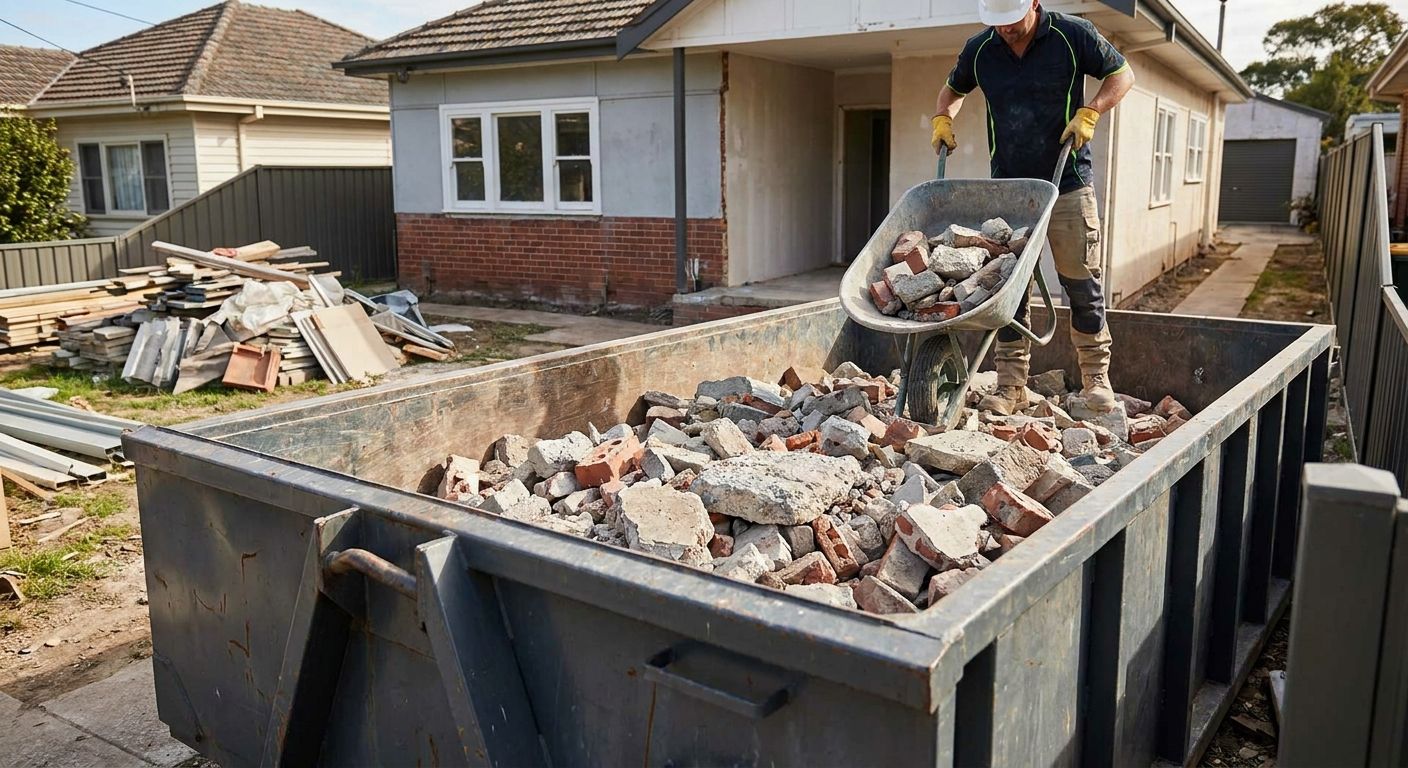
Every skip bin has a maximum fill line for safe transport, and kitchen waste — tile, stone, cabinetry timber — is dense. A bin that looks half-empty by volume can still hit its practical load limit, so leave headroom rather than stacking to the rim.
Access for delivery and pickup
Canberra kitchen renos often run bins on driveways or nature strips while the kitchen itself is inaccessible mid-demolition. Confirm the truck has clear access for drop-off and collection before booking, especially on narrower inner-Canberra streets.
Hire period that matches your timeline
A cabinet-and-benchtop swap might clear in a weekend; a full gut job with new flooring can run two to three weeks. Book a hire period that covers the messy demolition phase plus a buffer for delays, rather than the optimistic best-case schedule.
What materials the bin accepts
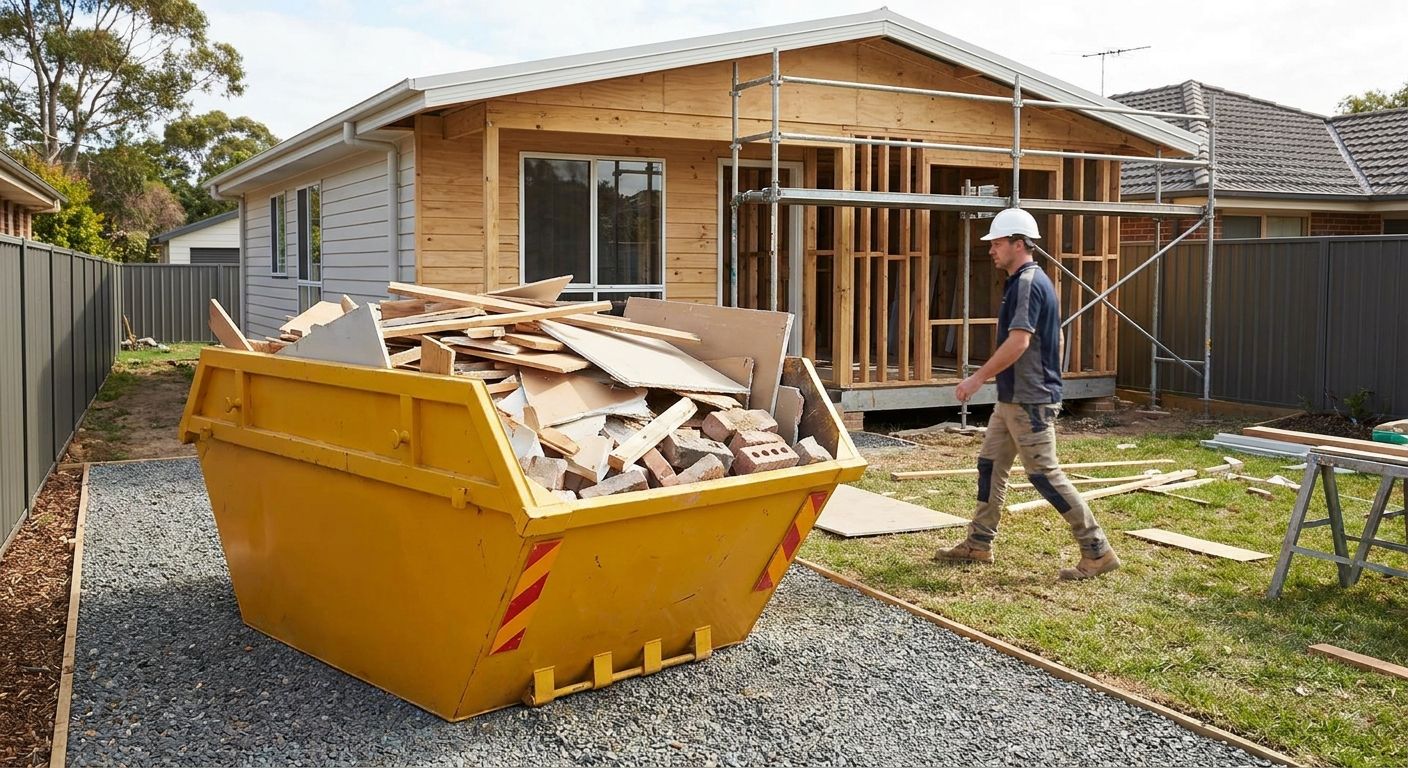
General skip bins are built for timber, plasterboard, tile, and mixed renovation waste — not asbestos, paint tins, gas bottles, or e-waste like old ovens and rangehoods. Confirm accepted materials with CRG Bins before demolition day so nothing gets loaded that has to come back out.
Council and site placement rules
If the bin sits on a nature strip or road verge rather than your own driveway, ACT rules may require a placement permit through Transport Canberra and City Services. Check this before delivery day if your property doesn't have off-street space for the bin.
Top picks by bin size
3m3 — the tight-space pick. Suits a minor kitchen refresh: new benchtop, cabinet doors, and a small amount of tile. Fits on narrow driveways where a bigger bin won't clear the gate. If your reno is just cosmetic swaps without wall or flooring work, this size clears the job in one load. Verdict: Consider for light refreshes only — it fills faster than expected on tile and grout waste.
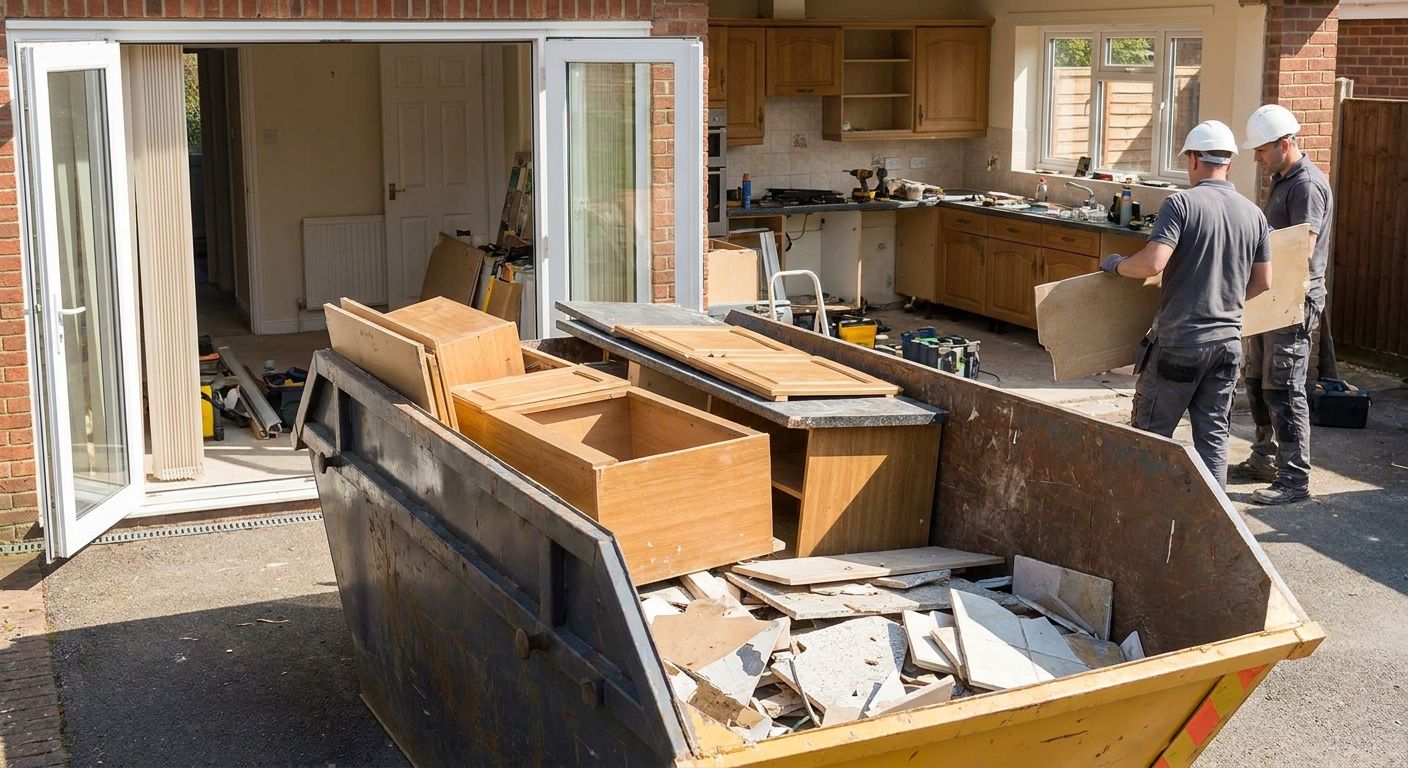
4m3 — the safe pick. This is the standard size for a full cabinetry and benchtop strip-out in a standard Canberra kitchen, covering old cupboards, splashback tile, benchtop offcuts and general demolition debris. It balances enough capacity for a typical mid-size kitchen without paying for unused space. Verdict: Buy — this is the default size for most standard kitchen renovation jobs in 2026.
6m3 — the full gut job. Once the scope expands to include flooring removal, wall relocation, or plasterboard replacement alongside the cabinetry, a 4m3 bin fills before the job is half done. The 6m3 gives enough headroom for a kitchen plus adjoining dining or laundry work. Verdict: Buy if your renovation touches more than cabinetry and benchtops.
8m3 — the overkill. Built for whole-house strip-outs or combined kitchen-and-bathroom jobs, not a standalone kitchen reno. Paying for this size on a single-room job usually means paying for space that never gets filled. Verdict: Skip unless the kitchen work is bundled with another major renovation area.
“If your kitchen reno includes ripping out flooring, size up to a 6m3 bin — the 4m3 fills fast on tile and grout waste.”
What to avoid
- Loading asbestos with general waste. Homes built before the early 1990s in Canberra can have asbestos sheeting behind old splashbacks or under vinyl flooring — this needs separate, licensed disposal, not a general skip bin.
- Treating gas and electrical items as general rubbish. Old gas cooktops, ovens with capacitors, and rangehoods with wiring intact don't belong in a standard skip — these need e-waste or gas-safe disposal streams.
- Overfilling past the marked line for "just one more piece." A bin loaded above its fill line can't be legally transported and gets left behind until it's brought back under the line, which stalls your project timeline.
Book the right bin size today
Get your kitchen renovation skip bin sorted before demolition day.
Verdict comparison
| Bin size | Best for | Fill risk | Verdict |
|---|---|---|---|
| 3m3 | Cosmetic refresh, minor cabinet swap | Fills fast on tile | Consider |
| 4m3 | Standard full cabinetry and benchtop strip-out | Balanced for most reno waste | Buy |
| 6m3 | Full gut job with flooring or wall work | Needs headroom for dense debris | Buy |
| 8m3 | Combined kitchen plus another room | Often underfilled on kitchen-only jobs | Skip |
FAQ
What size skip bin do I need for a kitchen renovation?
A 4m3 skip bin covers most standard Canberra kitchen renovations, including cabinetry, benchtops and splashback tile. Step up to a 6m3 bin if the job also includes flooring or wall removal.
Can I put old kitchen cabinets in a skip bin?
Yes, timber cabinetry is standard renovation waste accepted in general skip bins. Break down larger cabinet carcasses where possible to save volume and let the bin fit more debris.
How long can I keep a skip bin for a kitchen reno in Canberra?
Hire periods vary by booking, so confirm the timeframe with CRG Bins when you book. A weekend cabinet swap needs far less time than a full gut job running two to three weeks.
Do I need a permit for a skip bin in Canberra?
You may need a placement permit through Transport Canberra and City Services if the bin sits on a nature strip or road verge rather than your own driveway. Check this before delivery day if you lack off-street space.
Can asbestos go in a skip bin?
No, asbestos requires separate licensed disposal and cannot go in a general skip bin. Homes built before the early 1990s in Canberra should be checked before demolition if splashbacks or old flooring are being removed.
What's the difference between a 4m3 and 6m3 skip bin?
A 4m3 bin suits a standard cabinetry and benchtop strip-out, while a 6m3 bin adds capacity for flooring, wall removal, or an adjoining room. Choosing based on renovation scope, not kitchen floor area, avoids running out of space mid-job.
How much waste does a typical kitchen renovation generate?
Waste volume depends on scope more than kitchen size — a small kitchen with stone benchtops and tile can generate more debris than a larger kitchen with laminate finishes. Match the bin to what's actually being demolished.
Is skip bin hire cheaper than a rubbish removal service for a kitchen reno?
Skip bin hire generally works out more cost-effective once waste exceeds a couple of trailer loads, since you load at your own pace instead of paying per collection. Check current pricing on the CRG Bins site for your specific bin size and hire length.
One last thing
The detail most people miss on a kitchen reno: stone and tile waste is deceptively heavy for its volume, so a bin that looks two-thirds full by eye can already be near its practical load limit. Load the dense material — tile, stone, old cabinet hardware — first and flat along the base, then stack lighter timber and plasterboard on top. It keeps the load stable for transport and stops you needing a second bin for the last box of offcuts.