Ripping out a commercial kitchen or gutting a dining room generates a different waste stream than a home reno, and the wrong skip bin choice slows the whole job down. This guide covers what cafe and restaurant owners, builders and shopfitters need to know about skip bin hire for cafe renovation work in Canberra in 2026.
- Skip bin hire for cafe renovation works best with a 6-8m3 bin for full fit-outs, not a domestic-sized mini bin.
- CRG Bins' construction and renovation page suits full strip-outs; the kitchen renovation page suits equipment and cabinetry-heavy jobs.
- Grease trap waste, fryer oil and commercial equipment need separate disposal, not the general skip.
- Booking a bin before demolition starts avoids the number-one delay on hospitality fit-outs: nowhere to put debris.
Who this is for
This guide is for cafe owners, restaurant operators, shopfitters and builders managing a hospitality renovation in Canberra or the surrounding region. If you're stripping out old joinery, replacing commercial kitchen equipment, retiling a dining floor, or doing a full shopfront fit-out, the waste volume and mix is closer to a small construction site than a domestic reno. CRG Bins works with tradies and business owners on exactly this kind of job, and the bin size and timing decisions below come from what actually clogs up hospitality renovation timelines.
Why this matters
Hospitality fit-outs run on tight lease timelines. Every day a cafe sits closed with a skip full of demolition waste and no pickup booked is a day of lost trade, not just a construction delay. Restaurant and cafe strip-outs also produce a heavier mix than a house reno — tiled floors, stainless benching, old shopfitting timber, and packaging from new equipment — so getting the bin size wrong means paying for a second bin mid-job or overloading the first one past the fill line.
What to look for in skip bin hire for cafe renovation
Bin size matched to the scope, not the floor area
A 40-square-metre cafe stripped back to brick can still fill a 6m3 skip with tiling, cabinetry and old shopfitting in a day. Floor area tells you the site footprint, not the waste volume — base the size on what's coming out (flooring, joinery, ceiling tiles, old equipment), not the square metreage of the tenancy.
Access for a truck in a shopping strip or laneway
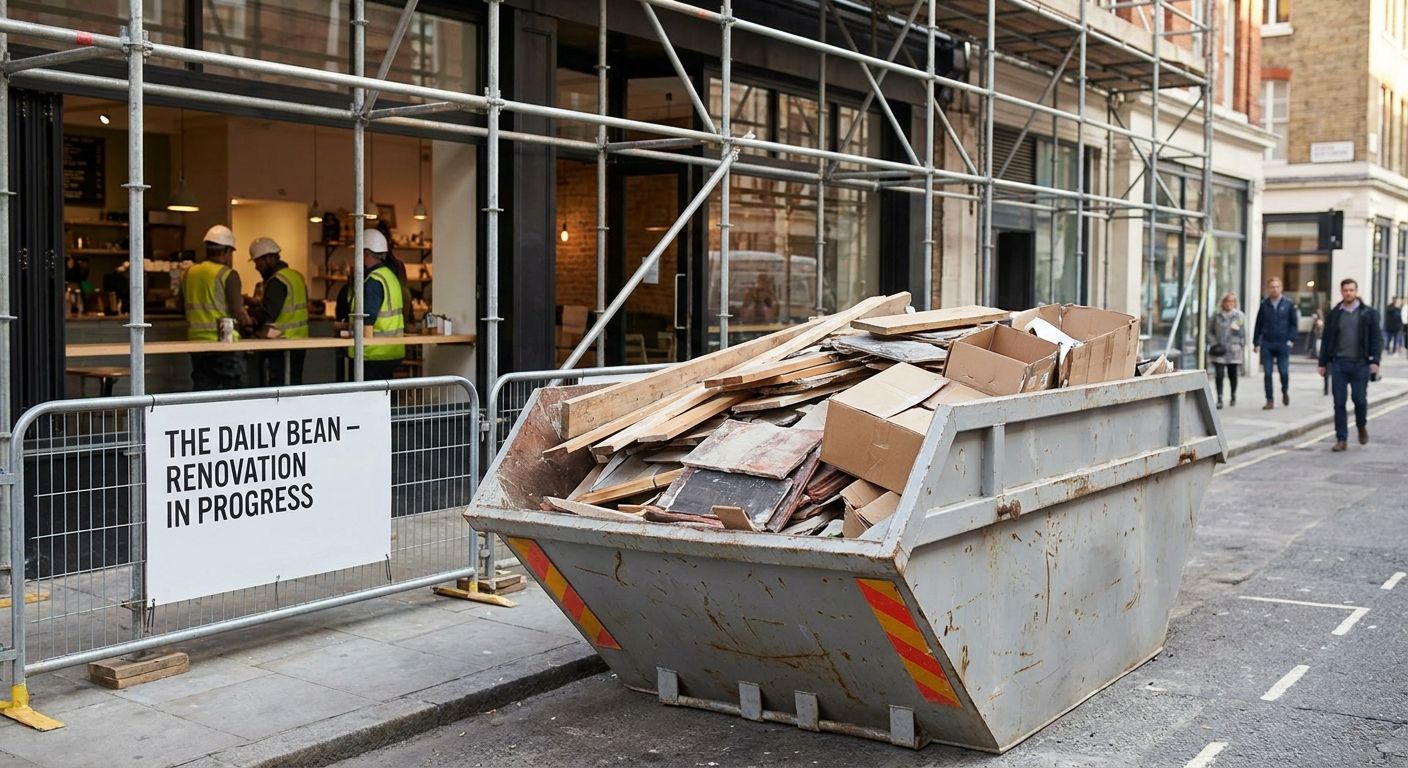
Most Canberra cafes sit in strips, arcades or laneways with tight loading zones and time-restricted parking. Confirm the bin can be dropped and picked up during a window that doesn't block foot traffic or breach the centre's delivery hours — this is the detail that gets missed until the truck is already on site.
Separation of general waste from equipment and fit-out materials
Old fryers, exhaust hoods, refrigeration units and grease traps often need separate handling from general construction skips because of oil residue, refrigerant gas or council waste rules. Mixing them into a general skip risks the bin being rejected at the tip, which stalls the whole renovation.
Turnaround speed on pickup and swap
A fit-out on a fixed opening date can't wait three days for a full bin to be swapped. Ask about realistic swap timing before booking, especially if the job runs a tight two- or three-week schedule.
Weight limits versus tile and concrete waste
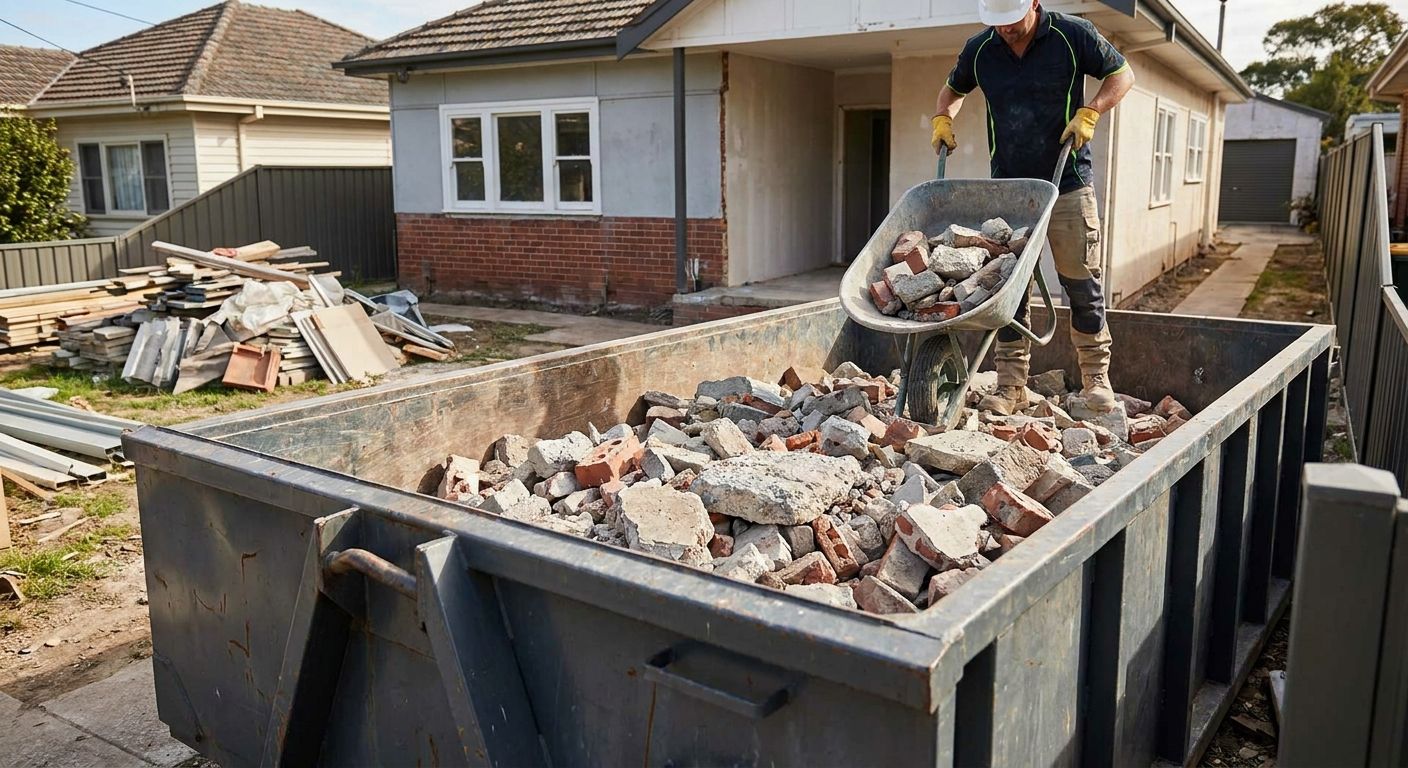
Cafe renovations often include ripping up tiled or polished concrete flooring, which is far heavier per cubic metre than timber or plasterboard. A bin sized right for volume can still hit its weight limit early if it's loaded with tile and screed — check the weight allowance, not just the size, before the trade crew starts filling it.
Placement that doesn't block deliveries or emergency egress
Commercial tenancies have fire egress and delivery dock requirements that a residential driveway doesn't. Confirm the bin placement won't breach these before it lands, because a council or centre management complaint can hold up the whole project.
Book a bin before demolition starts
Get the right size sorted for your Canberra fit-out timeline.
Top picks for cafe and restaurant renovation waste
The full strip-out pick: construction and renovation bin hire
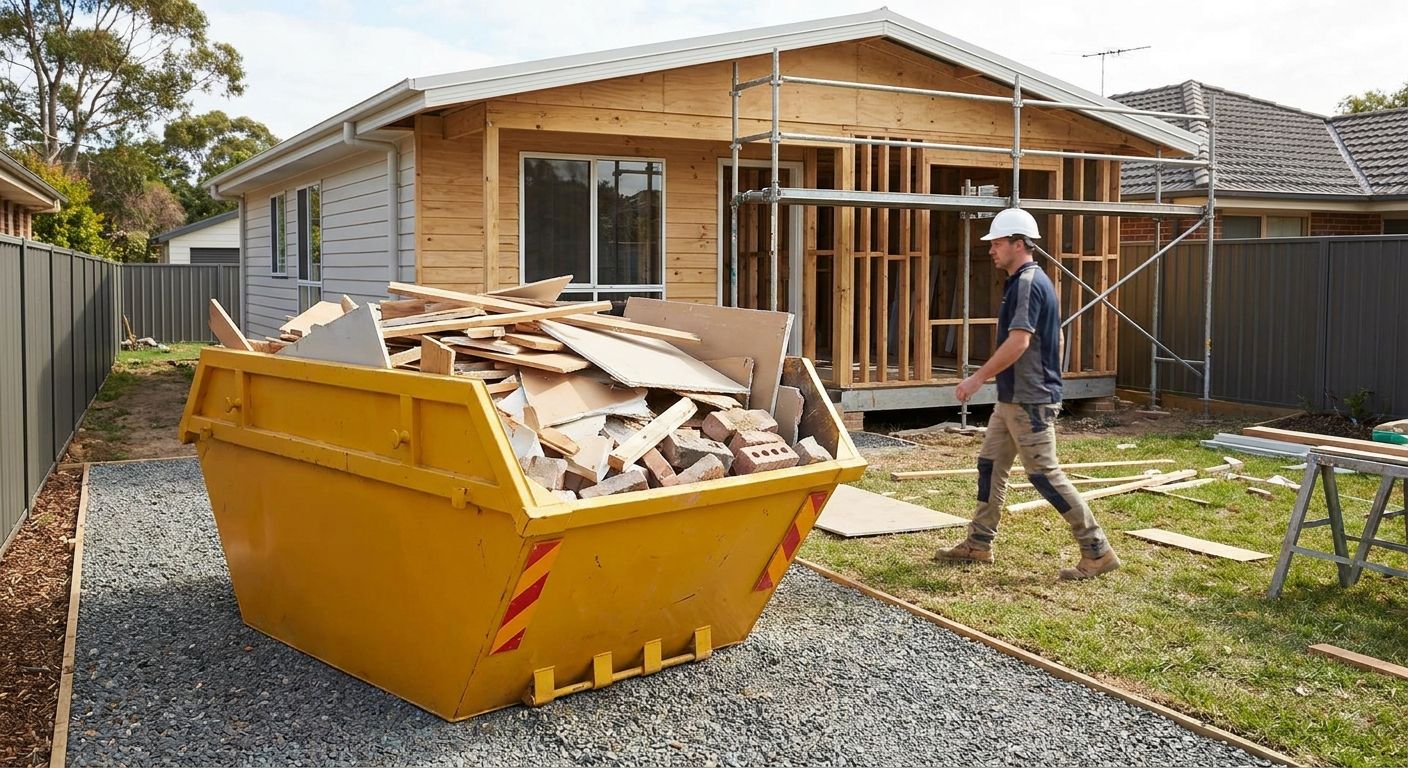
When the job is a complete gut — old fit-out, flooring, ceiling grid, partition walls — you need a bin sized for a construction site, not a bathroom reno. A 6-8m3 skip handles the bulk of demolition debris from a small-to-mid cafe strip-out without needing a mid-job swap. Skip bin hire for construction and renovation projects is built for this scale of job. Buy — this is the default choice for any cafe going back to shell.
The commercial kitchen pick: kitchen renovation bins
Commercial kitchen strip-outs generate a specific mix — stainless benching, old cabinetry, tiled splashbacks and packaging from new equipment — that's heavier and bulkier than a standard reno load. Skip bins for kitchen renovations is sized around this exact waste profile. Buy — pair it with separate arrangements for any refrigerant-bearing equipment.
The bathroom and amenities pick
Most cafes and restaurants carry a customer bathroom that gets refreshed alongside the main fit-out, and tiled bathroom waste is dense and awkward to mix into a general skip efficiently. Skip bins for bathroom renovations suits a standalone amenities refresh or a smaller job running alongside the main reno. Consider — only worth booking as a separate bin if the bathroom work isn't part of the main strip-out timeline.
The wildcard: a mini bin for front-of-house cosmetic work
If the job is limited to repainting, new furniture and light fixtures with no demolition, a full construction-sized skip is overkill and wastes budget. A smaller bin suits packaging waste, old furniture and paint tins rather than structural debris. Skip for anything involving flooring or joinery removal — undersizing here is the most common mistake on cosmetic-only refreshes that later expand in scope.
What to avoid
- A single small bin for a full fit-out — it looks cost-effective on paper but you'll pay for a second pickup once tiling and old joinery fill it in a day.
- Skipping the access check — a bin that can't be placed or collected within a strip's delivery hours turns into a parking dispute, not a waste solution.
- Mixing commercial kitchen equipment into a general skip — grease-contaminated or refrigerant-bearing units commonly get rejected at disposal, which stalls pickup for the whole bin.
Verdict comparison
| Renovation type | Best fit | Verdict |
|---|---|---|
| Full shopfront strip-out | Construction and renovation bins | Buy |
| Commercial kitchen replacement | Kitchen renovation bins | Buy |
| Customer bathroom refresh | Bathroom renovation bins | Consider |
| Cosmetic-only front-of-house update | Smaller general bin | Consider |
| Any job with tiled or concrete flooring removal | Sized for weight, not just volume | Buy with weight check |
FAQ
What size skip bin do I need for a cafe renovation?
Most cafe strip-outs need a 6-8m3 skip bin to handle flooring, old cabinetry and ceiling debris without a mid-job swap. Cosmetic-only refreshes with no demolition can usually run on a smaller bin.
Can I put commercial kitchen equipment in a skip bin?
General kitchen cabinetry and benching can go in a standard skip, but oil-contaminated fryers, grease traps and refrigerant-bearing units usually need separate disposal. Mixing them in risks the bin being rejected at the tip.
Is skip bin hire for cafe renovation different from residential hire?
Yes — commercial fit-outs generate heavier, denser waste like tile, screed and stainless equipment, and sites often have stricter access and delivery-window rules than a residential driveway.
How much notice do I need to book a skip bin for a fit-out?
Book before demolition starts, ideally as soon as the renovation date is locked in for 2026, so the bin lands on day one instead of holding up the trade crew.
What happens if the skip bin fills up before the job is done?
A bin filled past its line or weight limit can't be collected safely, which means the job pauses until a swap is arranged. Sizing for the full scope up front avoids this.
Can a skip bin be placed in a shopping strip or laneway?
Placement depends on centre or council rules around delivery hours and fire egress. Confirm this before the bin is booked, not after it arrives.
Do I need a separate bin for tiles and concrete waste?
Not always a separate bin, but tile and screed waste is heavy, so check the weight allowance on the bin you book rather than sizing on volume alone.
What's the biggest mistake in skip bin hire for cafe renovation?
Undersizing the bin based on the tenancy's floor area instead of the actual scope of demolition and fit-out work being done.
One last thing
The detail that catches most first-time hospitality renovators isn't the bin size — it's the tip rejection risk from mixing grease-trap or refrigerant waste into a general skip, which can stall a pickup mid-renovation right when the lease clock is ticking. Sort equipment disposal separately from day one and the general skip stays usable for the rest of the job.